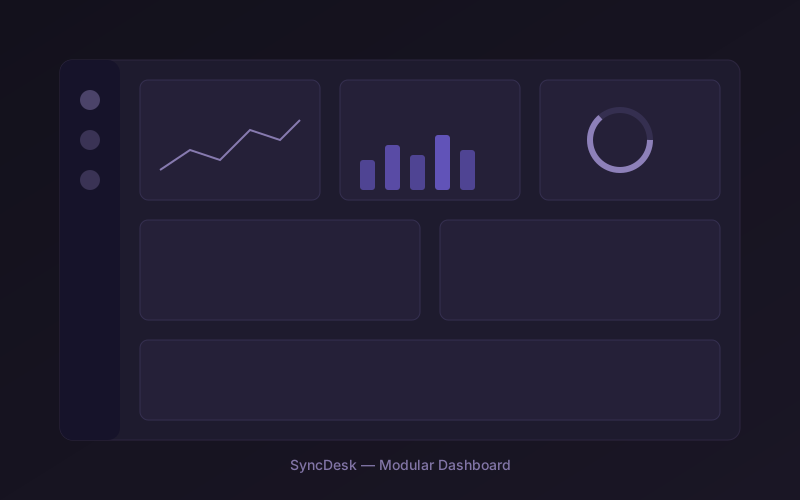
SyncDesk: Modular Dashboard Concept
TL;DR
- Designed over a 1-week sprint with a focus on accessibility, flexible UI, and practical integration, SyncDesk explores how modular design can simplify complex multitasking ecosystems.
- SyncDesk is a modular dashboard concept designed to unify scattered digital workflows (e.g., coding, project management, collaboration) into a single customizable space. Instead of replacing existing tools, it connects them through draggable modules that sync in real-time with their native services.
A year after graduation, I challenged myself with a focused design sprint—a one-week project to sharpen my design strategy and deepen my familiarity with tools and systems.
The Problem
We’ve all used platforms like Notion, Trello, or Asana for everything from planning trips to managing team projects. But when tasks scale up or cross over, things quickly get messy. We often find ourselves juggling multiple tools at once.
“During my coding classes, I juggled 6+ tools: an online compiler, a Trello board, a Pomodoro timer, Notion, YPT, GitHub and Discord. The fragmentation broke my focus repeatedly.”
It became clear that despite so many platforms, there’s a gap: a unified space where users can manage modular tasks without hopping between tools. Just like apps that aggregate events from various calendars or sites that track product prices across stores, there’s room for something that brings multiple workflows into a single, customizable UI.
The Research
Online research showed a crowded tool landscape, with users deeply tied to familiar ecosystems. Building an “all-in-one” replacement felt bloated and unnecessary.
The Key Insight: Instead of replacing tools, create a flexible space that connects them — letting users assemble what they need, their way.
Key Pain Points and Success Criteria:
- Context-switching disrupts focus
- Overloaded interfaces; users want simplicity + control
- Seamless integration (no forced migration)
- Modular, customizable workflows
- Meets WCAG AA accessibility + offers default dark mode
Studying tools like Discord, Notion, and Trello revealed a key user priority: flexible, customizable workspaces.
The core idea: a modular dashboard where users drag, drop, and configure elements (tasks, analytics, changelogs, team spaces) to fit any workflow — personal or collaborative. Crucially, these modules live-sync with original services (e.g., Google Colab), keeping everything unified without breaking existing ecosystems.
Final Designs

User flow showing how adding a server works

How adding different blocks works
